
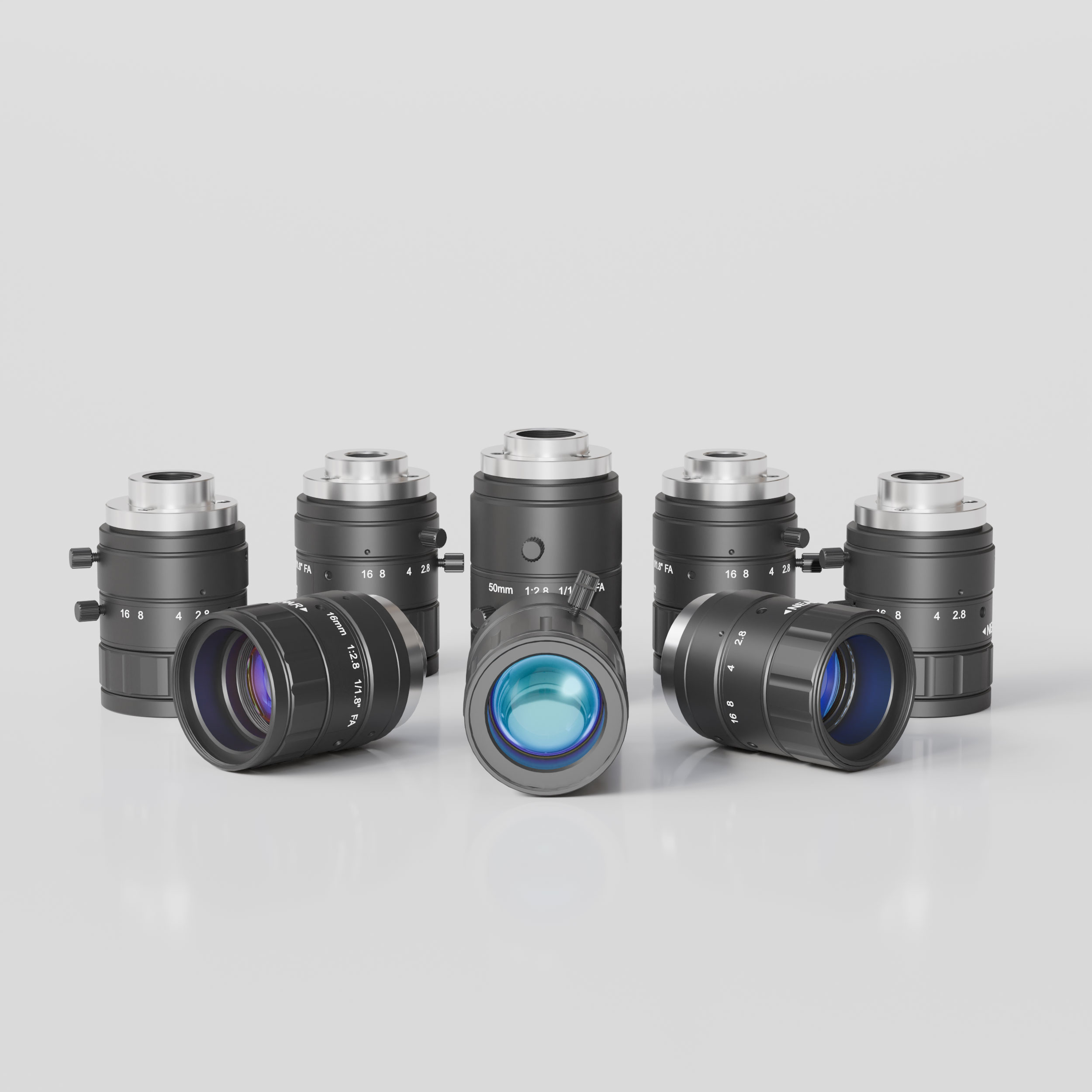
In machine vision applications, Field of View (FOV) determines the physical area captured in a single image, while Working Distance (WD) defines the distance between the lens and the inspection object.
Given the Sensor Size, Focal Length, and Working Distance, you can calculate the FOV. Given the Sensor Size, Focal Length, and required FOV, you can estimate the WD. Given the Sensor Size, WD, and required FOV, you can estimate the required focal length.
1. What Parameters Are Needed to Calculate FOV and Working Distance?
Calculating the FOV, Working Distance, or Focal Length of a Machine Vision Lens requires four key parameters: Sensor Size, Focal Length, Working Distance, and Required FOV. The known parameters depend on which value you need to calculate.
① Sensor Size
Sensor Size defines the effective imaging dimensions of the camera sensor. Use the sensor's actual effective width or height in the calculations.
-
Sensor Width: Used to calculate horizontal FOV or estimate focal length and working distance from the horizontal FOV.
-
Sensor Height: Used to calculate vertical FOV or estimate focal length and working distance from the vertical FOV.
Use the sensor's actual effective dimensions rather than estimating its size solely from the camera's nominal Sensor Format.
② Focal Length
Focal Length is the optical focal length of the lens, typically specified in millimeters (mm). With the same Sensor Size and Working Distance, a longer focal length generally produces a narrower FOV, while a shorter focal length produces a wider FOV.
Use the actual focal length specified by the lens manufacturer.
③ Working Distance (WD)
Working Distance is the distance between the lens and the inspection object. It helps determine the lens position and imaging conditions.
Before calculating WD, define the target working distance and confirm the measurement reference specified by the lens manufacturer. The calculated optical distance may differ from the actual installation distance if they use different measurement references.
④ Required Field of View (FOV)
Required FOV is the physical area that the camera must capture in a single image. Define both the required horizontal width and vertical height.
The Required FOV must cover the entire inspection area, with sufficient margin for object movement, positioning errors, and installation tolerances.
Use Sensor Width when calculating horizontal FOV and Sensor Height when calculating vertical FOV.
Unit consistency: All length parameters must use consistent units. If Sensor Size and Focal Length are specified in millimeters (mm), convert Working Distance and FOV to millimeters as well.
2. How to Calculate Field of View for a Machine Vision Lens
When Sensor Size, Focal Length, and Working Distance are known, approximate formulas can be used to calculate the horizontal and vertical areas covered by the lens.
① Calculate Horizontal and Vertical FOV
The approximate formula for horizontal FOV is:
Horizontal FOV ≈ (Sensor Width × Working Distance) ÷ Focal Length
The approximate formula for vertical FOV is:
Vertical FOV ≈ (Sensor Height × Working Distance) ÷ Focal Length
Where:
-
Sensor Width / Sensor Height: The effective width or height of the camera sensor.
-
Working Distance: The working distance used in the calculation.
-
Focal Length: The focal length of the lens.
Use Sensor Width to calculate horizontal FOV and Sensor Height to calculate vertical FOV. Do not mix parameters from different directions.
These formulas provide preliminary estimates for conventional, non-macro imaging. Actual results may also depend on the optical design and the measurement reference used for Working Distance.
② Determine Whether the FOV Covers the Inspection Area
Compare the calculated FOV with the width and height of the actual inspection area to determine whether the lens can cover the target region.
-
FOV is larger than the required inspection area: The inspection area can fit within the image, but the object may occupy a smaller proportion of the available pixels.
-
FOV is smaller than the required inspection area: The lens cannot cover the entire inspection area under the current conditions. Consider a shorter Focal Length or a longer Working Distance.
-
FOV meets the coverage requirement: Confirm that both horizontal and vertical FOV cover the entire inspection area, with sufficient margin for object movement, positioning errors, and installation tolerances.
3. How to Calculate Working Distance for a Machine Vision Lens
When the required FOV, Sensor Size, and Focal Length are known, the FOV formula can be rearranged to estimate the Working Distance required to achieve the desired imaging range.
① Calculate Working Distance from the Required FOV
Using horizontal measurements, the approximate formula is:
Working Distance ≈ (Focal Length × Horizontal FOV) ÷ Sensor Width
Using vertical measurements, the approximate formula is:
Working Distance ≈ (Focal Length × Vertical FOV) ÷ Sensor Height
Match Horizontal FOV with Sensor Width and Vertical FOV with Sensor Height. All dimensions must use consistent units.
These formulas provide preliminary estimates for conventional, non-macro imaging and cannot replace the actual Working Distance specifications provided by the lens manufacturer.
② Confirm That the Calculated Distance Fits the Installation Requirements
The calculated WD is an estimate. The final installation distance must also account for the lens manufacturer's measurement reference and the available equipment space.
-
Measurement Reference: Confirm the reference point specified by the manufacturer, such as the front of the lens or another designated surface. Distances measured from different reference points are not directly interchangeable.
-
Available Space: Confirm that the equipment layout and camera mounting position can accommodate the calculated working distance.
-
Design Adjustment: If the calculated distance exceeds the available installation space, reassess the Focal Length or Required FOV and recalculate the WD.
4. How to Determine the Required Focal Length from FOV and Working Distance
When Sensor Size, Working Distance, and the required FOV are known, you can estimate the required Focal Length and use the result to identify candidate lens specifications.
① Calculate Focal Length from Sensor Size, WD, and FOV
Using horizontal measurements, the approximate formula is:
Focal Length ≈ (Sensor Width × Working Distance) ÷ Horizontal FOV
Using vertical measurements, the approximate formula is:
Focal Length ≈ (Sensor Height × Working Distance) ÷ Vertical FOV
Include the necessary positioning margin in the required FOV so that the calculated focal length accounts for the actual inspection area, not just the physical dimensions of the object itself.
② Select a Candidate Machine Vision Lens
Use the calculated focal length and required FOV to identify candidate lens specifications that can cover the inspection area.
-
The calculated value is close to an available focal length: Consider that focal length as a candidate and verify its actual FOV.
-
The calculated value falls between two available focal lengths: Compare the FOV of both candidates at the target Working Distance and select a lens that fully covers the inspection area.
-
The FOV is too narrow: Consider a shorter focal length or a longer Working Distance.
-
The FOV is wider than necessary: Consider a longer focal length, provided the entire inspection area still fits within the image.
5. How to Verify the Calculated FOV and Working Distance
Before finalizing the lens selection, compare the calculated results with the manufacturer's specifications and confirm that the lens can cover the inspection area and focus correctly at the actual installation position.
① Check the Lens Specifications
Review the following specifications for each candidate lens:
-
Actual FOV: Confirm that the actual horizontal and vertical fields of view at the target Working Distance cover the inspection area.
-
Focus Range: Confirm that the lens can achieve clear focus at the planned working distance.
-
Sensor Format and Image Circle: Confirm that the lens supports the camera's sensor format and that its effective image circle covers the entire sensor area.
If the manufacturer provides FOV data for a specified Working Distance, prioritize those specifications when checking the calculated results.
② Verify Imaging Performance at the Actual Installation Position
Install the camera and lens at the planned position and complete the following checks:
-
Inspection Area Coverage: Confirm that the entire inspection area fits within the image and that all critical inspection features remain within the usable imaging area.
-
Positioning Margin: Confirm that expected object movement and positioning variations will not cause the inspection area to extend beyond the image.
-
Actual Focus: Verify that the lens produces a clear image at the specified Working Distance.
-
Calculation Verification: If the measured FOV differs from the estimate, recheck Sensor Size, Focal Length, the WD measurement reference, and the manufacturer's specifications before deciding whether to adjust the lens or installation position.